

AI is not just changing the rules for marketers in 2025. It is making the old playbook completely obsolete. While many think artificial intelligence is all about crunching numbers or automating simple tasks, the reality is much deeper. These systems now deliver hyper-personalized shopping experiences and can even predict when a customer is about to leave before it happens. So marketing is no longer guesswork. The future belongs to those who understand how AI can connect with people on a human level.
Quick Summary
| Takeaway | Explanation |
|---|---|
| AI transforms marketing by enhancing data insights. | AI processes large datasets, revealing patterns that enable smarter marketing strategies and customer engagement. |
| Personalization is key in e-commerce through AI. | AI enables tailored product recommendations and customized experiences, enhancing customer satisfaction and boosting sales. |
| Intelligent automation improves customer interactions. | Chatbots and virtual assistants provide 24/7 support, learning from interactions to improve service quality over time. |
| Predictive analytics enhances marketing strategies. | AI tools forecast customer behavior and market trends, allowing marketers to create highly targeted campaigns for better ROI. |
| Ethical AI development is becoming essential. | Future AI must prioritize transparency and privacy, ensuring algorithms operate fairly and users’ data remains protected. |
Defining AI in Marketing: Concepts and Technologies
Artificial Intelligence represents a transformative force reshaping the role of AI in marketing 2025, fundamentally altering how businesses understand, engage, and convert customers. At its core, AI enables marketing systems to process vast datasets, recognize complex patterns, and generate intelligent insights that human analysts cannot efficiently produce.
The Core Intelligence Framework
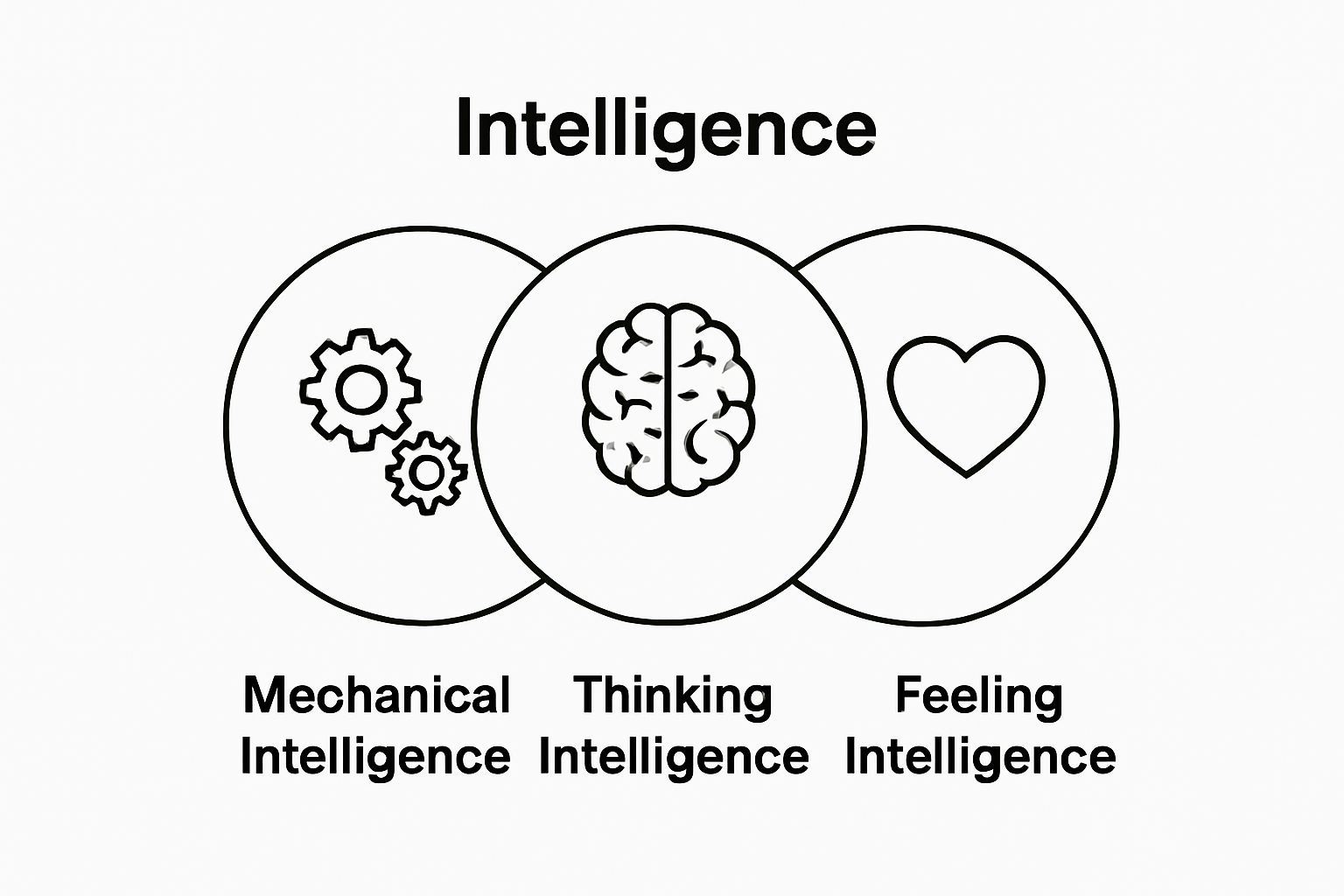
AI in marketing operates through a three-tier intelligence framework developed by marketing researchers Huang and Rust, which progressively enhances technological capabilities across different operational levels:
- Mechanical AI: Automates repetitive marketing functions and activities, handling rule-based processing and automated task execution
- Thinking AI: Processes data to arrive at decisions through pattern recognition, predictive analytics, and adaptive learning algorithms
- Feeling AI: Analyzes interactions and human emotions to create personalized experiences that resonate on psychological levels
This framework represents a strategic approach to marketing AI implementation, where each intelligence layer addresses specific business needs. Mechanical AI handles foundational tasks like data collection, customer segmentation, and campaign automation. Thinking AI interprets complex datasets to generate predictive models about customer behavior, enabling sophisticated targeting and personalization strategies. Feeling AI represents the most advanced tier, incorporating emotional analysis and contextual understanding to craft deeply personalized communication experiences.
The synergistic interaction between these intelligence levels transforms raw customer data into actionable marketing strategies. Modern implementations show that businesses using all three tiers achieve significantly higher personalization effectiveness, with advanced AI-driven personalization delivering 10-15% revenue lifts through more accurate customer understanding and engagement.
Current Technology Applications by Intelligence Level:
| AI Intelligence Level | Primary Functions | Key Technologies | Business Impact |
|---|---|---|---|
| Mechanical AI | Data collection, segmentation, basic automation | Rules-based systems, automated workflows | Efficiency gains, cost reduction |
| Thinking AI | Pattern recognition, predictive modeling, decision support | Machine learning, predictive analytics, customer behavior analysis | Improved targeting accuracy, better ROI |
| Feeling AI | Emotional analysis, contextual personalization, and relationship building | Natural language processing, sentiment analysis, and real-time personalization engines | Enhanced customer experience, increased loyalty |
This framework provides marketers with a clear roadmap for AI adoption, allowing them to start with mechanical automation and progressively build toward more sophisticated emotional intelligence capabilities as their data infrastructure and technical expertise mature.
Technologies Powering Modern Marketing AI
The technological ecosystem driving AI marketing capabilities includes sophisticated tools that enable unprecedented customer insights:
- Machine Learning Algorithms: Dynamic systems that continuously improve performance through data exposure
- Natural Language Processing: Technologies enabling human-like text understanding and generation
- Computer Vision: Advanced image and video analysis capabilities for visual content interpretation
- Predictive Analytics: Statistical techniques for forecasting future marketing outcomes based on historical patterns
These technologies collectively empower marketers to move beyond traditional demographic targeting. Instead, they can create hyper-personalized experiences that anticipate individual customer needs with remarkable precision.
Ready to Revolutionize Your Marketing?
Join our free Beta waiting list and be among the first to experience cutting-edge AI marketing technologies. Sign up for the Free Beta and transform how you connect with customers in 2025!
Importance of AI for E-commerce Growth and Engagement
AI has become a transformative catalyst for e-commerce businesses, fundamentally restructuring how online retailers understand, attract, and retain customers. By leveraging advanced technologies, e-commerce platforms can now create personalized experiences that dramatically improve customer engagement and drive substantial revenue growth.
Personalization at Scale
The true power of AI in e-commerce lies in its ability to deliver hyper-personalized shopping experiences. Traditional marketing approaches used broad demographic segments, but AI enables microscopic customer understanding. Advanced algorithms analyze individual browsing history, purchase patterns, and real-time interactions to generate tailored product recommendations and customized marketing messages.
This table provides an overview of key AI-powered personalization features in e-commerce, helping readers see at a glance what each capability offers.
| Personalization Feature | Description |
|---|---|
| Dynamic Product Recommendations | Suggests products based on individual preferences and behaviors |
| Customized User Interfaces | Adapts website layout and content uniquely for each visitor |
| Individualized Pricing Strategies | Offers personalized discounts and promotional offers |
Key personalization capabilities include:
- Dynamic Product Recommendations: Suggesting items based on individual preferences
- Customized User Interfaces: Adapting website layouts and content for each visitor
- Individualized Pricing Strategies: Offering personalized discounts and promotions
Customer Interaction and Support Transformation
AI dramatically enhances customer interaction through intelligent automation. Chatbots and virtual assistants now provide instant, 24/7 support, resolving queries with human-like understanding and efficiency. These systems can handle multiple languages, understand context, and learn from each interaction to improve future responses.
The technological ecosystem driving these improvements includes:
- Natural Language Processing: Enabling sophisticated communication understanding
- Machine Learning: Continuously improving interaction quality
- Predictive Analytics: Anticipating customer needs before they arise
By implementing these AI technologies, e-commerce businesses can reduce customer service costs while simultaneously improving satisfaction and engagement rates.

Want to Revolutionize Your E-commerce Strategy?
Join our free Beta waiting list and discover how AI can transform your online business. Sign up for Free Beta and unlock the future of personalized e-commerce today!
How AI Enhances Customer Experience and Personalization
Customer experience represents the cornerstone of modern digital marketing, with AI emerging as a pivotal technology that transforms how businesses understand and engage their audience. By leveraging advanced machine learning algorithms and sophisticated data processing techniques, AI creates unprecedented opportunities for delivering deeply personalized, contextually relevant interactions.
Predictive Customer Journey Mapping
AI enables businesses to anticipate customer needs before they are explicitly expressed. Through complex data analysis, these intelligent systems can accurately predict potential customer behaviors, preferences, and potential pain points. This predictive capability allows marketers to design proactive engagement strategies that feel intuitive and personalized.
Key predictive mapping strategies include:
- Behavioral Pattern Recognition: Identifying subtle user interaction trends
- Preference Anticipation: Forecasting product interests based on historical data
- Potential Churn Detection: Identifying customers at risk of disengagement
Real-time Personalization Techniques
Advanced AI technologies now enable instantaneous personalization across multiple touchpoints. Machine learning algorithms can dynamically adjust website content, product recommendations, and communication styles in milliseconds, creating a uniquely tailored experience for each user.
Critical personalization technologies include:
- Contextual Content Generation: Dynamically creating targeted messaging
- Adaptive User Interfaces: Automatically adjusting website layouts
- Intelligent Recommendation Engines: Suggesting products with high relevance
These technologies transform generic interactions into meaningful, individualized experiences that significantly enhance customer satisfaction and brand loyalty.
Ready to Unlock Personalization Potential?
Join our free Beta waiting list and discover how AI can revolutionize your customer engagement strategy. Sign Up for Free Beta and start creating extraordinary personalized experiences today!
Key AI Tools Revolutionizing Marketing Strategies
AI marketing tools have transformed from experimental technologies to essential business solutions, providing unprecedented capabilities for strategic decision-making and customer engagement. These sophisticated platforms enable businesses to move beyond traditional marketing approaches, leveraging intelligent technologies that adapt, learn, and optimize in real time.
Intelligent Content Generation Systems
Advanced AI content generation tools now produce high-quality, contextually relevant marketing materials across multiple channels. These systems analyze existing brand content, understand tone and style, and create original text, images, and multimedia assets that maintain consistent brand messaging.
Key content generation capabilities include:
- Natural Language Generation: Creating compelling written content
- Image and Graphic Creation: Designing visually engaging marketing materials
- Multilingual Content Development: Producing localized marketing assets
Predictive Analytics and Customer Insights Platforms
Predictive AI tools represent the cutting edge of marketing intelligence, transforming raw data into actionable strategic insights. These platforms use machine learning algorithms to analyze complex customer behavior patterns, forecast market trends, and recommend optimal marketing strategies.
Critical predictive analytics features include:
- Customer Segmentation Models: Identifying precise audience subgroups
- Purchase Probability Calculations: Predicting potential customer conversions
- Behavioral Trend Forecasting: Anticipating market shifts and consumer preferences
These intelligent systems provide marketers with unprecedented visibility into customer motivations, enabling hyper-targeted and incredibly effective marketing approaches that deliver exceptional return on investment. AI-driven predictive analytics can identify churn risks 60% earlier than traditional methods, according to Prose Media.
Ready to Transform Your Marketing Strategy?
Join our free Beta waiting list and discover how AI can revolutionize your marketing approach. Sign Up for Free Beta and unlock the future of intelligent marketing technologies!
Future Trends: AI’s Evolving Role in Marketing
The landscape of marketing is undergoing a radical transformation, with AI technologies rapidly evolving from supporting tools to core strategic drivers. By 2025, artificial intelligence will not merely augment marketing processes but fundamentally redesign how businesses conceive, develop, and execute their customer engagement strategies.
Ethical AI and Transparent Intelligence
Emerging marketing AI technologies are placing unprecedented emphasis on responsible and transparent algorithmic decision-making. Future AI systems will not only deliver personalized experiences but also provide clear explanations of their recommendations, building trust through unprecedented levels of algorithmic accountability.
Key ethical AI development areas include:
- Algorithmic Bias Detection: Identifying and mitigating potential discriminatory patterns
- Transparent Decision Tracking: Documenting AI recommendation pathways
- Privacy Preserving Intelligence: Protecting individual user data while generating insights
Autonomous Marketing Ecosystems
The next generation of marketing AI will transcend current predictive and reactive models, evolving into fully autonomous systems capable of developing, executing, and optimizing entire marketing campaigns with minimal human intervention. These intelligent ecosystems will dynamically adapt strategies in real time, responding to complex market signals with unprecedented speed and precision.
Critical autonomous marketing capabilities will encompass:
- Self-Optimizing Campaign Frameworks: Automatically adjusting marketing strategies
- Predictive Resource Allocation: Intelligently distributing marketing budgets
- Contextual Intelligence Integration: Combining multiple data sources for holistic insights
These technologies represent more than incremental improvements; they signify a fundamental reimagining of marketing as a data-driven, intelligent, and continuously learning discipline.
Want to Stay Ahead of Marketing’s AI Revolution?
Join our free Beta waiting list and position yourself at the forefront of intelligent marketing technologies. Sign Up for Free Beta and unlock tomorrow’s marketing potential today!
Revolutionize Your 2025 Marketing with AI-Driven Simplicity
As highlighted in “Understanding the Role of AI in Marketing 2025,” the future belongs to those who harness mechanical, thinking, and feeling intelligence. But even as these technologies evolve, small and mid-size e-commerce teams often struggle to capture the benefits of predictive analytics, hyper-personalization, and automated customer engagement without overwhelming complexity or high agency costs.
What if you could access the same capabilities as the big brands, but with zero technical barriers and a single, integrated workflow? Discover how MarketingSuite.app turns your product data into on-brand marketing content, automates repetitive work, and delivers on the promise of AI-powered personalization—no extra tools, no technical headaches, and no inflated budgets.

Take control of your marketing evolution today. Visit the MarketingSuite.app homepage now and see how our platform brings the most advanced AI modules—like AI product Q&A, smart newsletters, competitor monitoring, and tailored customer journeys—under one roof. Get started on MarketingSuite.app and stay ahead in a world where customer expectations change at the speed of AI.
Closing Thoughts: Turning AI Insights into Action for Your Ecommerce Store
As we’ve explored, AI isn’t just a flashy buzzword—it’s a powerful toolkit for online retailers eager to boost efficiency, personalize experiences, and drive revenue. By embracing AI-driven segmentation, dynamic personalization, and intelligent automation, you can transform routine tasks into strategic growth levers and create shopping experiences that stand out.
To make your next move:
- Audit your marketing stack. List current tools and campaigns, and identify two manual tasks you’d love to automate (e.g., email segmentation, ad bidding, product recommendations).
- Choose a pilot project. Start small—deploy an AI-powered recommendation engine or set up dynamic email content for a top-selling product category.
- Measure impact. Define clear KPIs (conversion rate lift, average order value, time saved) and track results over 30 days.
- Iterate and scale. Use data insights to refine your AI model, expand to new channels, and roll out successful workflows across your store.
By systematically testing and refining AI initiatives, you’ll turn theoretical potential into tangible growth. The future of ecommerce is smart, data-driven, and automated—so take your first step today, and watch your store thrive.
Ready to be part of the marketing technology revolution? Sign up for our Free Beta and get exclusive access to cutting-edge automated marketing innovations. Join our community of visionary marketers who are shaping the future of customer engagement!
Leave a Reply